Mastering the rock: Tips and techniques
Welcome to Pebblepinchers.com's guide to enhancing your climbing journey. Whether you are just starting or looking to refine your skills, these tips and techniques are designed to help you climb stronger, smarter, and safer.
Strengthen your grip and upper body
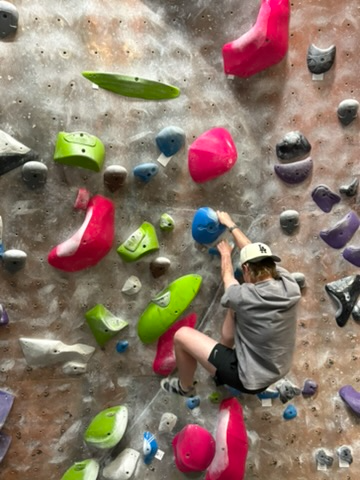
One of the best ways to improve the ease of scaling up the wall is to practice over and over again to build your muscles and overall feel of where to place your body. However, our training plan guide is a great way to help train certain muscles and describes how it will aid you in your climb.
Enhance your balance with yoga
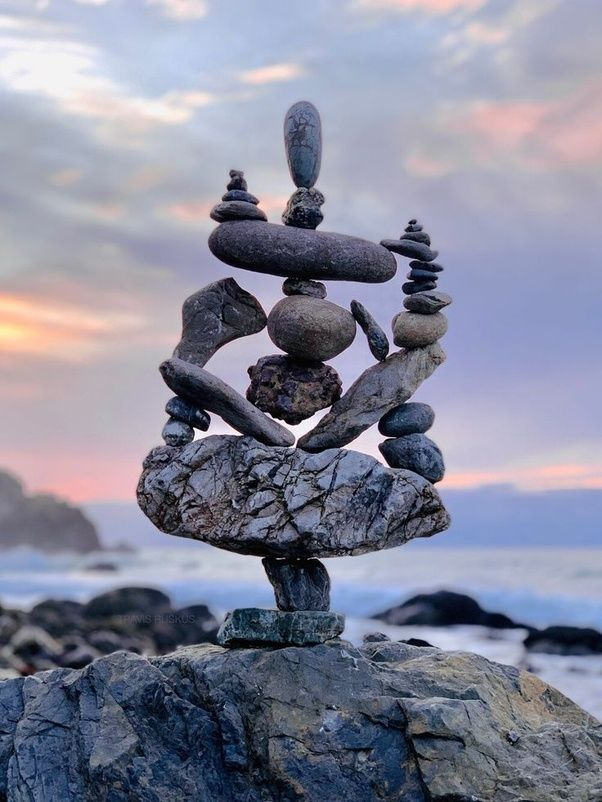
Balance is a fundamental aspect of rock climbing that often gets overlooked. Integrating yoga and balance training into your regimen can dramatically improve your stability and body awareness. Yoga helps you find your center of gravity, allowing for more efficient movements and reducing the energy expended on the wall. This increased balance translates directly to more controlled and graceful ascents.
Practice and persistence are key
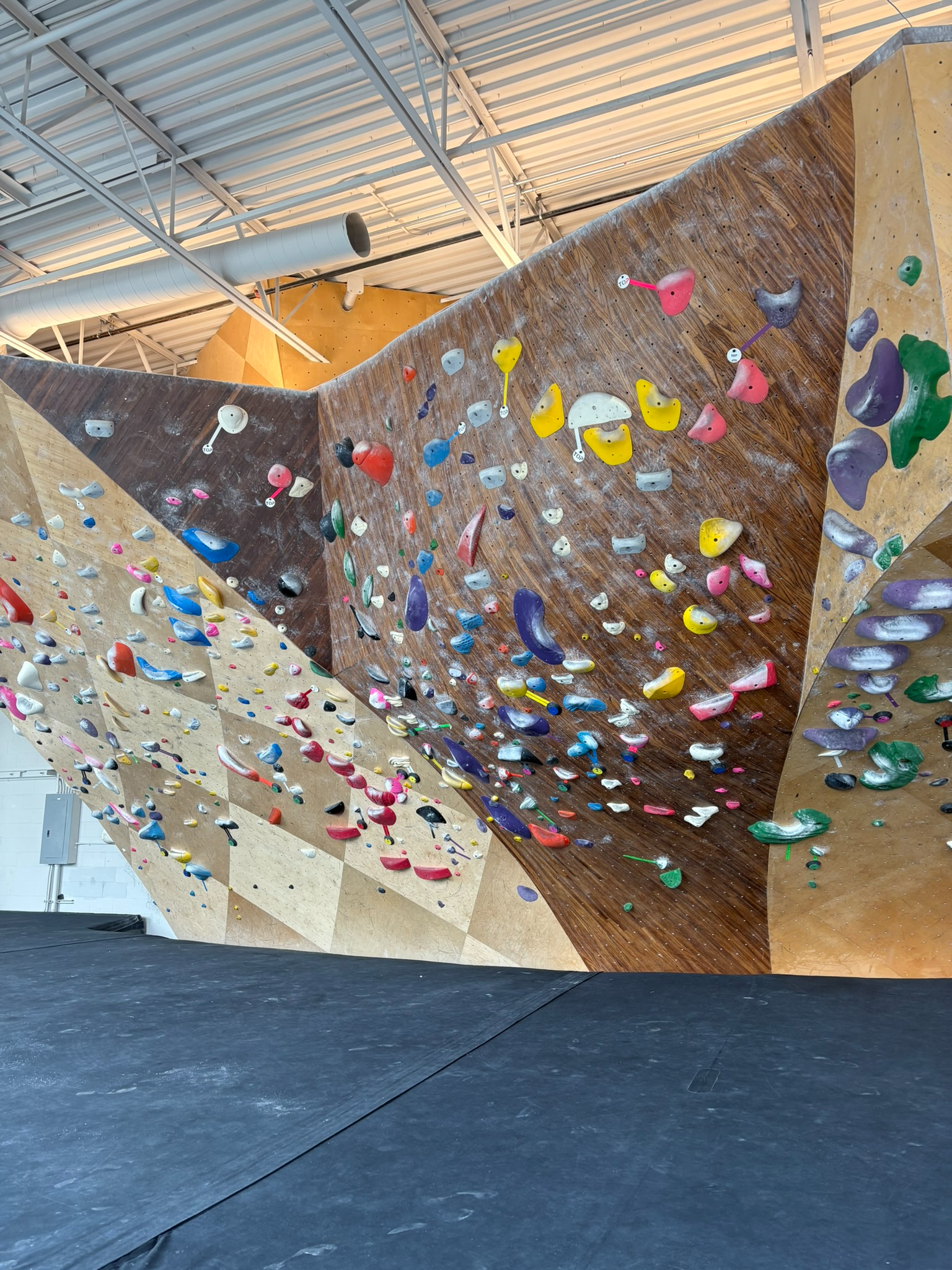
Practicing even 10 minutes a day on a certain tip or technique we list below will help you prepare for your climbs, whether you are on the mat about to try a new route or outside on a rock face. A common mistake many climbers make is giving up too early. While these practices aid in preparation, the most effective way to learn how to use them is by actively applying them while climbing. Don't be afraid to try, fail, and try again; persistence is your most valuable tool.
Getting to know your climb
Becoming a better climber is learning about different holds, how to grip them, and what to know by just looking at the wall.
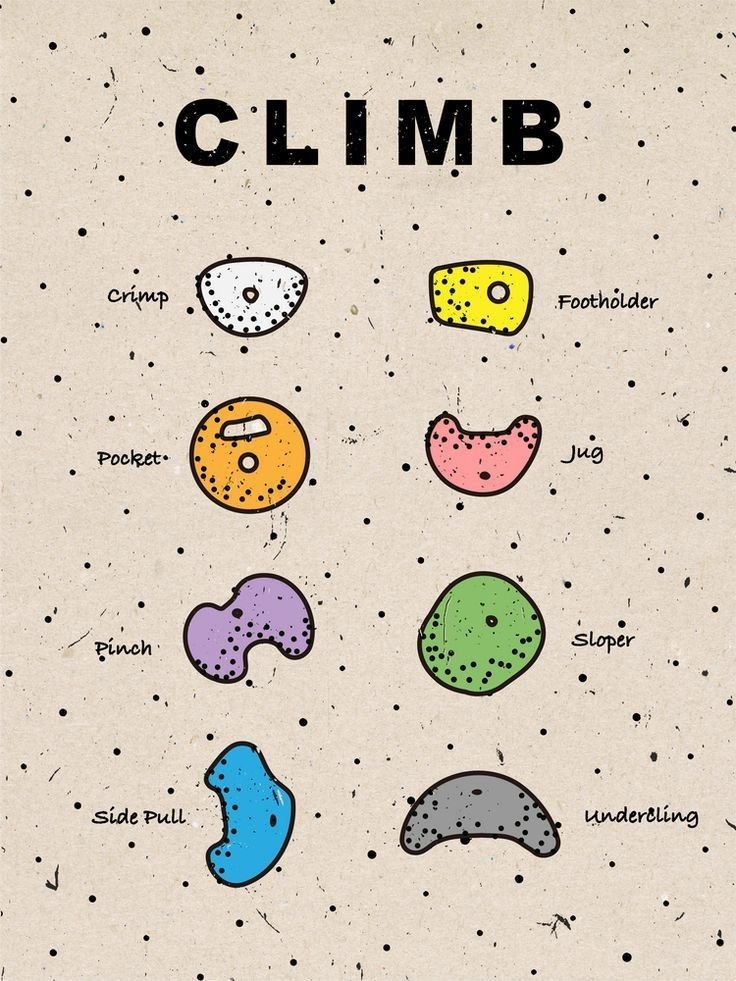
Below is an image from pinterst.com on different types of holds and what they look like:
Types of Holds:
- Crimp: Crimping is one of the most important grips since edges often make the best handholds. To crimp, you will put all of your finger tips or as many as will fit on the flattest part of an edge, and then place your thumb over your index finger. By placing your thumb over your finger, it creates extra strength to your grip.
- Foot holder: How you stand on a foothold depends on its shape and orientation, as well as the available handholds and the disused body position. Rock shoes grip tenaciously so you can stand on tiny edges or rough patches of hooded rock. Often, you’ll push straight down on the footholds to support your weight. If the foot holds are poor, you may have to push your feet slightly into the rock to make them stick. Other times, you will need to push your feet in the outward directions called stemming to get weight off of your hands. New climbers often lack the foot strength of experienced climbers, but stiff-soled climbing shoes can compensate for this lack until your feet build up more muscle.
- Pocket Hold: Pocket holds. Oftentimes, there will be a hold where you can literally only fit your fingers or even one finger. When you put your fingers in it is best to wrap your hand around to find the best grip possible. When you use a pocket, it’s a great tip to remember where it is so you can use it as a foothold later.
- Jug: A great hold for beginners that don’t have a ton of upper strength yet is a jug grip: wrapping your finger around an uncut edge like holding onto a jug handle.
- Pinch: A pinch grip allows you to grip a small sliver or knob of rock. You will use your thumb and index fingers to literally pinch the rock to hold on. Using this grip is tricky since it doesn’t allow the most strength for your upper body. You would want to use a pinch hold when your lower body is stable.
- Sloper: An open grip is required when using sloping handholds. While it is not as powerful as crimping, it is still a great way to hold on while using your fingers.
- Side pull: Side pulling is when you will need to hold onto the rock, but in order to stay on you will need to lean the opposite way with your body to maintain balance. Which often is paired with flagging on of your legs.
- Undercling: Undercling is where you have to press your hand on the innermost surface of the side of the rock and pinch it with your thumb. This grip is challenging especially if you don't have a lot of arm strength.
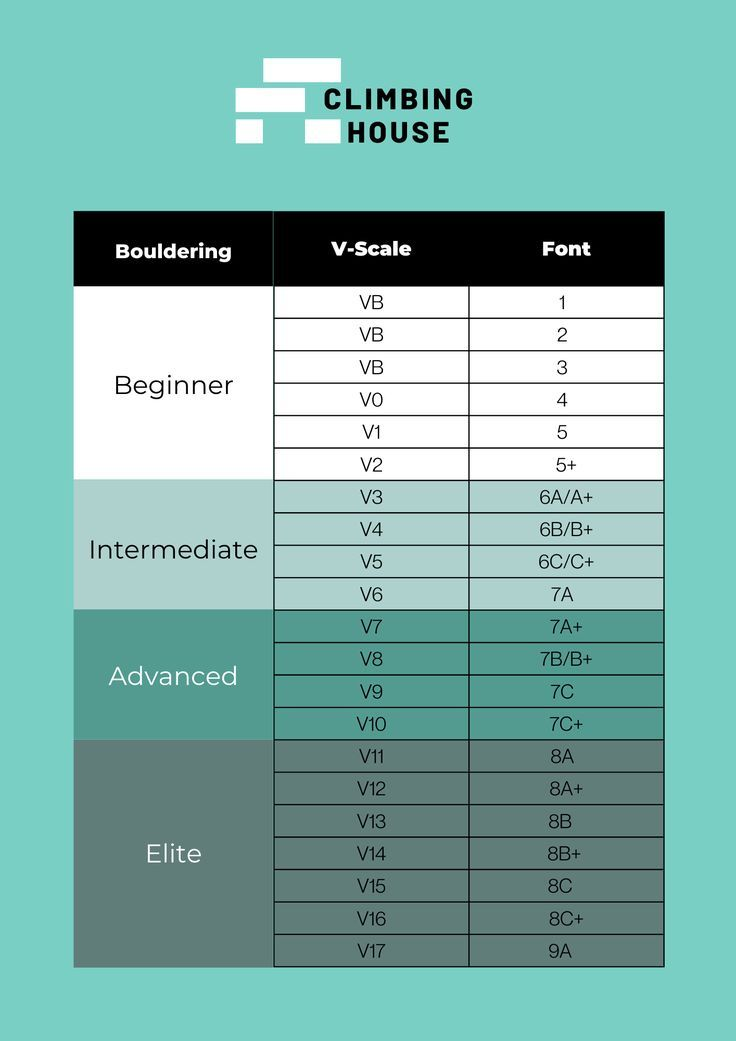
Basic difficulty Ratings
- Most climbing gyms will have different holds that are color coordinated to different climbing routes that are often changed and tested every so often by the employees. Color coordinated holds will have a mark that shows where to start and where to place your hands to begin the climb, but from there on out it is up to you to decipher how to execute it.
- Each climb is rated by difficulty by using a system that starts with V for the V-Scale, a bouldering grading system that rates problems from V0 (easiest) to V17 (hardest). DPM Climbing summarizes that "The V-Scale was developed in the 1990s by John “Vermin” Sherman at Hueco Tanks, Texas, to provide a standardized way to measure bouldering difficulty across North America and increasingly worldwide It’s the most widely used system for bouldering in the U.S. and many other regions". Difficulty can also be measured by using the "font scale" but most commonly the V-scale is used.
Some of the most difficult climbs (V17) found around the globe are:
-
Burden of Dreams – Finland, 2016, first V17 boulder ever established. Only 8 moves, but each is extremely difficult Hard Climbs.
-
Return of the Sleepwalker – USA, 2021, by Daniel Wood and Will Bosi.
-
L’Ombre du Voyager – France, 2023, by Barefoot Charles Albert.
-
Arrival of the Birds – Switzerland, 2024, by Aidan Roberts and Shaolin.
-
No One Mourns the Wicked – USA, 2024, by Nathaniel Coleman.
-
The Big Slamm – Italy, 2025, by Elias Iagnemma.
Which have only been completed by the most skilled and advanced climbers.
Different Types of Climbing
"Rock climbing has grown rapidly over the past two decades, from the pursuit of a small band of crazies to a mainstream sport with thousands of participants. The immense variety of the rock around the world has led rock climbing to diverge into several disciplines, including top roping, sport climbing, traditional climbing, and bouldering.
With the variety of climbers and sub-genres of climbing, there is almost something for everyone".
From Rock Climbing: Mastering Basic Skills by Craig Luebben.
Read the tabs to the right to read more about what Craig Luebben has to say about each category of climbing:
**When first starting out climbing we recommend trying bouldering first since it is the least injury prone and is great to practice hand holds, form, and techniques while being close to the ground. However, that doesn't mean you shouldn't try other types of climbing! If any of these categories interest, go try them and stay safe!
Rapid fire Tips and Tricks
- Keep your body weight towards your feet. If you can’t reach a hold, you most likely just need to step higher. Seek footholds located in front of your body rather than off to the side. Take several small steps if possible, rather than big leaps.
- Place your feet firmly in holds and keep feet still as you climb to maintain proper grip.
- Maintain good body posture to reduce injury.
- Make smooth weight transfers to reduce the chance of falling.
- Practice rolling onto your bum and then onto your back when you fall to help prevent spraining.
- Stay relaxed.
- Have fun and try again!
Create Your Own Website With Webador